
Shiloh & Joppa
It was an extremely bitter-sweet morning… We were once again thrilled to hear from Don & Cindy Martz about their trip to Israel, but this marked the conclusion of their presentation-series. We hope they will be back in some way, shape, or form…
Today, they taught us about the past, present, and future importance of Shiloh.
Before we started, they explained that terminology is important because it reflects a specific ideology. For instance, in the news lately, you have probably heard the term “West Bank” being used rather than “Judea and Samaria.” The use of “West Bank” undermines the legitimacy of the Jewish claims to the land of Judea and Samaria.
In fact, read this February 29, 2024, press release from Congresswoman Claudia Tenney:
Washington, DC – Congresswoman Claudia Tenney (NY-24) today introduced the RECOGNIZING Judea and Samaria Act to require all official United States documents and materials to use the term "Judea and Samaria" instead of the "West Bank."
Additional cosponsors of this legislation include Representatives Randy Weber (TX-14) and Anthony D’Esposito (NY-04).
The term Judea and Samaria dates back millennia to the ancient Kingdoms of Judah and Samaria. In 1967, after Israel’s Arab neighbors launched the Six-Day War, Israel reclaimed Judea and Samaria from Jordan. The term “West Bank” is used to delegitimize Israel’s historical claim to this land. In November 2019, Secretary of State Mike Pompeo announced that the United States would formally recognize Israeli sovereignty over the Golan Heights and Judea and Samaria. Recently, Secretary of State Antony Blinken reversed this position, stating the Biden administration's disappointment in Israel's recent decision to expand its settlements in the region. This condemnation comes in spite of the fact that under the Oslo Accords, a bilateral agreement between Israel and Palestinian representatives, Israel was granted full military and civilian control over the majority of Judea and Samaria.
"The Israeli people have an undeniable and indisputable historical and legal claim over Judea and Samaria, and at this critical moment in history, the United States must reaffirm this," said Congresswoman Tenney. "The misguided decision by the Biden administration to revoke the Pompeo Doctrine undermines our greatest ally in the Middle East. The RECOGNIZING Judea and Samaria Act requires all U.S. legal documents to use the rightful term "Judea and Samaria" to refer to this territory instead of the "West Bank." This bill reaffirms Israel's rightful claim to its territory. I remain committed to defending the integrity of the Jewish state and fully supporting Israel's sovereignty over Judea and Samaria."
###

Again, terminology is important because it reflects a specific ideology.
“Occupied” is a term the United Nations uses regarding Palestinian rights. That position says the land has always belonged to the indigenous people known as Palestinians.
“Liberated” is a term many Israeli’s use to identify the West Bank to reference the fact that the land belongs to Israel, always has, and always will. The Jews were there before the term Palestinian came into use meaning the Palestinians are not indigenous to that area.
“Palestinian” is a person displaced Arab people.
“Indigenous” means original inhabitants of the land.
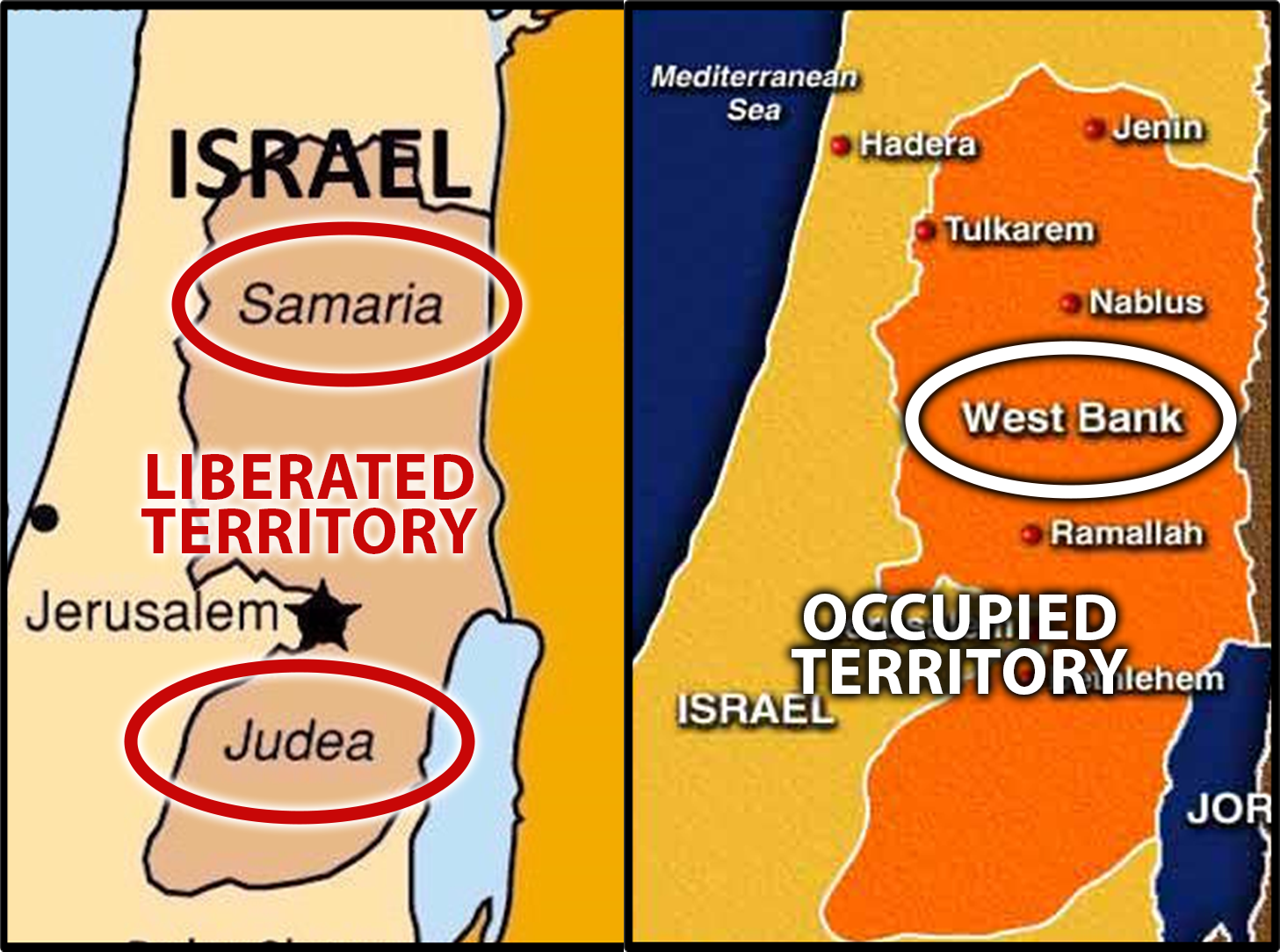
So, in calling Judea and Samaria, the “West Bank,” you are crediting the west of the Jordan to the land, instead of Israel - the rightful occupants of the land.
The LORD appeared to Abram and said, “To your offspring I will give this land.” - Genesis 12:7
This would have been the (then) land of Canaan
The LORD said to Abram, “Look as far as you can see in every direction - north and south, east, and west. I am giving all this land, as far as you can see, to you and your descendants as a permanent possession .... Go and walk through the land in every direction, for I am giving it to you.” - Genesis 13:14-15,17
Notice how God speaks in the present tense AND says the possession He is giving is PERMANENT?
On that day the LORD made a covenant with Abram and said, “To your descendants I give this land, from the river of Egypt to the great river, the Euphrates - the land of the Kenites, Kenizzites, Kadmonites, Hittites, Perizzites, Rephaites, Amorites, Canaanites, Girgashites and Jebusites.” - Genesis 15:18-21
When Abraham's promised son Isaac became an adult, God established the Abrahamic Covenant with him.
“For to you and your descendants I will give all these lands and will confirm the oath I swore to your father Abraham.” - Genesis 26:3
Later, God established a covenant with Abraham's grandson, Jacob.
The Lord said to Jacob, “I am the LORD, the God of your father Abraham, and the God of Isaac. I will give you and your descendants the land, on which you are lying .... and you will spread out to the west and to the east, to the north and to the south.” - Genesis 28:13-14

It is first important to note that Abraham gave the son he bore to Sarah’s concubine, Ishmael, a great deal of land. Ishmael’s territory is significantly larger than the land that would be inherited by Isaac, then Jacob.
Abraham left everything he owned to Isaac. But while he was still living, he gave gifts to the sons of his concubines and sent them away from his son Isaac eastward.” - Genesis 25:5-6
Dr. Arnold G. Fruchtenbaum breaks this down in “The Book of Genesis” :
Abraham sent them to the Trans-Jordan and the Saudi Arabian area.
Zimran – West Arabian Coast
Joksham – South Arabia
Medan – South of Eilat
Midian – NW Arabia/S Sinai (Midianites)
Ishbak – S Jordan (Edomites)
Shuah – Syro-Arabian Desert
Now that the land was under Israelite control, the entire community of Israel gathered at Shiloh & set up the Tabernacle. - Joshua 18:1

Shiloh’s location was explicitly outlined:
But look, there is the annual festival of the Lord in Shiloh, which lies north of Bethel, east of the road that goes from Bethel to Shechem, and south of Lebonah. - Judges 21:19
This was the location of the tabernacle, where the ark of the covenant was kept.
The whole assembly of the Israelites gathered at Shiloh and set up the tent of meeting there. The country was brought under their control, but there were still seven Israelite tribes who had not yet received their inheritance. - Joshua 18:1
The entire congregation of Israel gathered at Shiloh. This marked the beginning of a new chapter in the history of the Israelites. It was the first time that they had settled in a permanent place and established a center of worship.
For 369 years, through the books of Joshua and the Judges (from the time Israel entered the land until the time of the prophet Samuel), the Ark of the Covenant was in the Tabernacle at Shiloh.
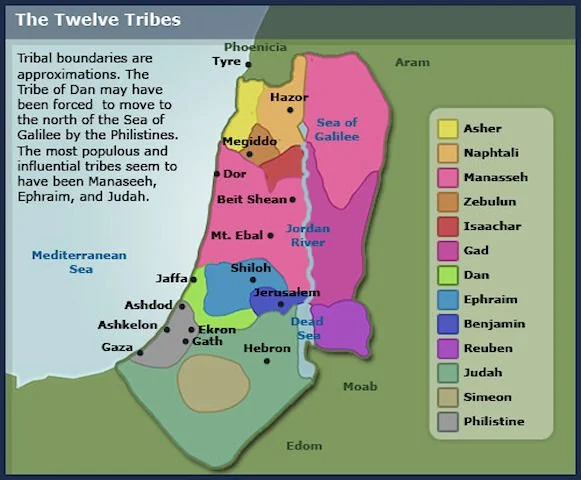
Joshua then cast lots for them in Shiloh in the presence of the Lord, and there he distributed the land to the Israelites according to their tribal divisions. - Joshua 18:10
Joshua divided the land between the 12 tribes by lottery.

1 Samuel tells the story of Hannah praying for a child. God gives her Samuel, and she dedicated him to the temple. Samuel (the prophet who anointed King Saul and King David) served in Shiloh under the priest, Eli. This all happened in Shiloh.

The Ark of the Covenant was (foolishly) removed from the temple, and taken with to battle (kind of luck a good luck charm). It was captured by the Philistines during battle.
Eli’s sons, Hophni and Phineus, were killed in battle.
The man who brought the news replied, “Israel fled before the Philistines, and the army has suffered heavy losses. Also your two sons, Hophni and Phinehas, are dead, and the ark of God has been captured.” When he mentioned the ark of God, Eli fell backward off his chair by the side of the gate. His neck was broken and he died, for he was an old man, and he was heavy. He had led Israel forty years. - 1 Samuel 4:17-18
The location of where Eli would have been standing to receive this news, and die, is preserved to this day and seen in the image above.

The red heifer is an important detail to Israel’s past and future… here are two articles that explain:

To further add to the prophesies coming to pass, read this expert from the article:
Third Shofar Blast on the Temple Mount Sends Prophetic Shockwaves Through the World
Prophetic Meaning
The prophet Isaiah wrote, “And it shall come to pass on that day, that a great shofar shall be sounded, and those lost in the land of Assyria and those exiled in the land of Egypt shall come and they shall prostrate themselves before HaShem on the holy mount in Jerusalem.” (Isa. 27:13)
For Christians, these events echo the warnings of Revelation 11 and 2 Thessalonians 2, which foretell a future Temple that will stand at the center of end-times events. Jesus commanded His followers to “watch” the signs of the times (Matt. 24), reminding us that His return will not take us by surprise if we remain vigilant.
Join Charisma Magazine Online to follow everything the Holy Spirit is doing around the world!
The third blast of the shofar from the Temple Mount should not be dismissed as coincidence. It represents an unfolding prophetic drama, pointing us to the urgency of the hour. As believers, we are called to remain steadfast and bold in proclaiming the gospel, for the time is drawing near when every eye will see Him.

Cindy said, “If you want to know what time is it on God’s prophetic clock, just keep your eyes on Israel… Israel is the hour hand of the clock. If you begin to hear rumblings about Jerusalem we are on the minute hand of the clock. If you hear rumblings about the temple we are really getting close because that is the second hand of the clock.”
Next, Don and Cindy took us to Caesarea Marittima. This was the first artificial harbor constructed in the ancient world. 25-13 B.C. by Herod the Great. The harbor extended out into the sea through an ingenious use of concrete that hardened under the water. The enclosed harbor covered over 40 acres and could accommodate 300 vessels.
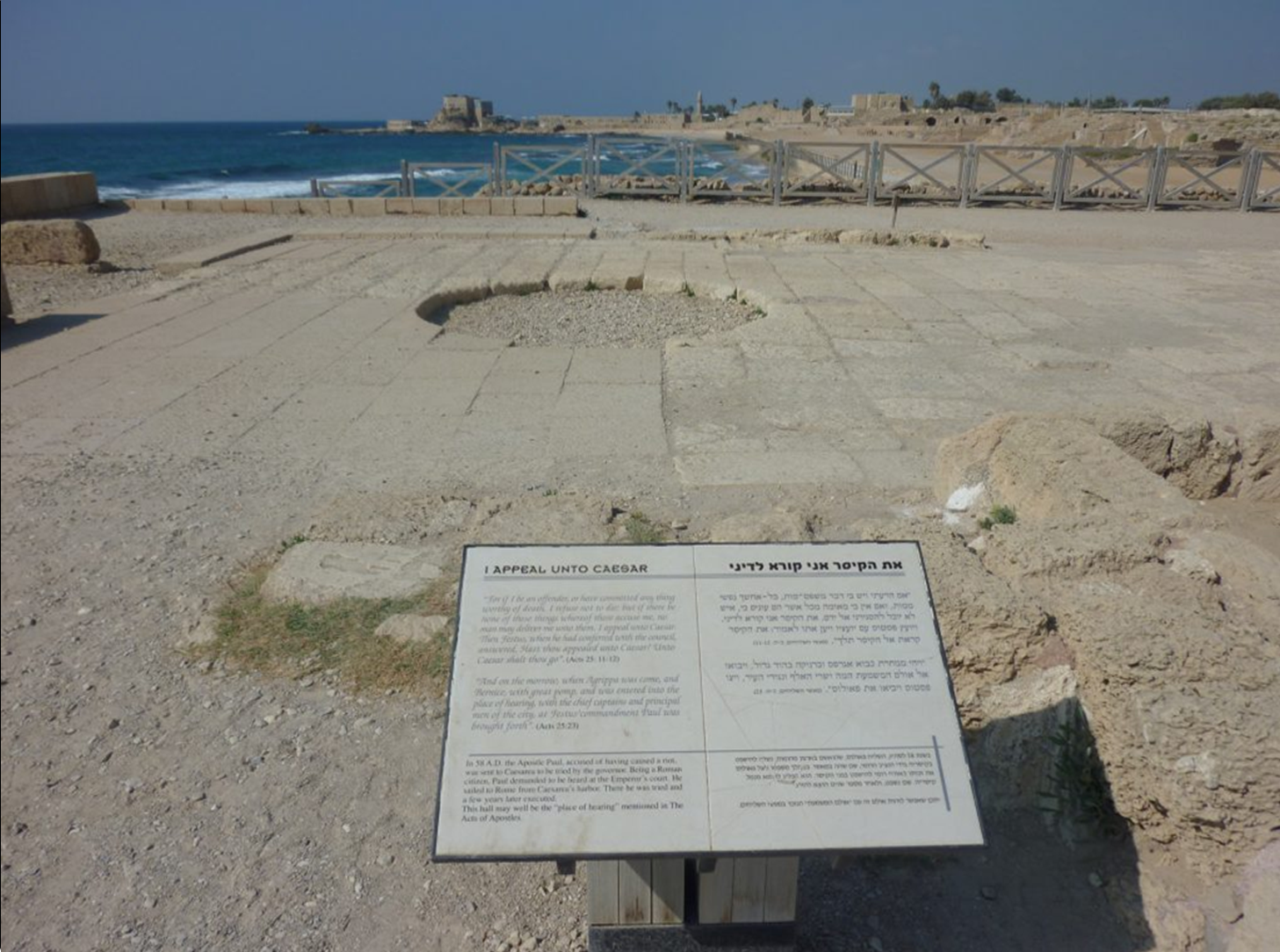
Then, they showed us the Hall in Caesarea, where Herod judged criminals. The Apostle Paul likely stood at this very spot when he demanded to be sent to Rome to appeal directly to Caesar.
If, however, I am guilty of doing anything deserving death, I do not refuse to die. But if the charges brought against me by these Jews are not true, no one has the right to hand me over to them. I appeal to Caesar!” After Festus had conferred with his council, he declared: “You have appealed to Caesar. To Caesar you will go!” - Acts 25:11-12
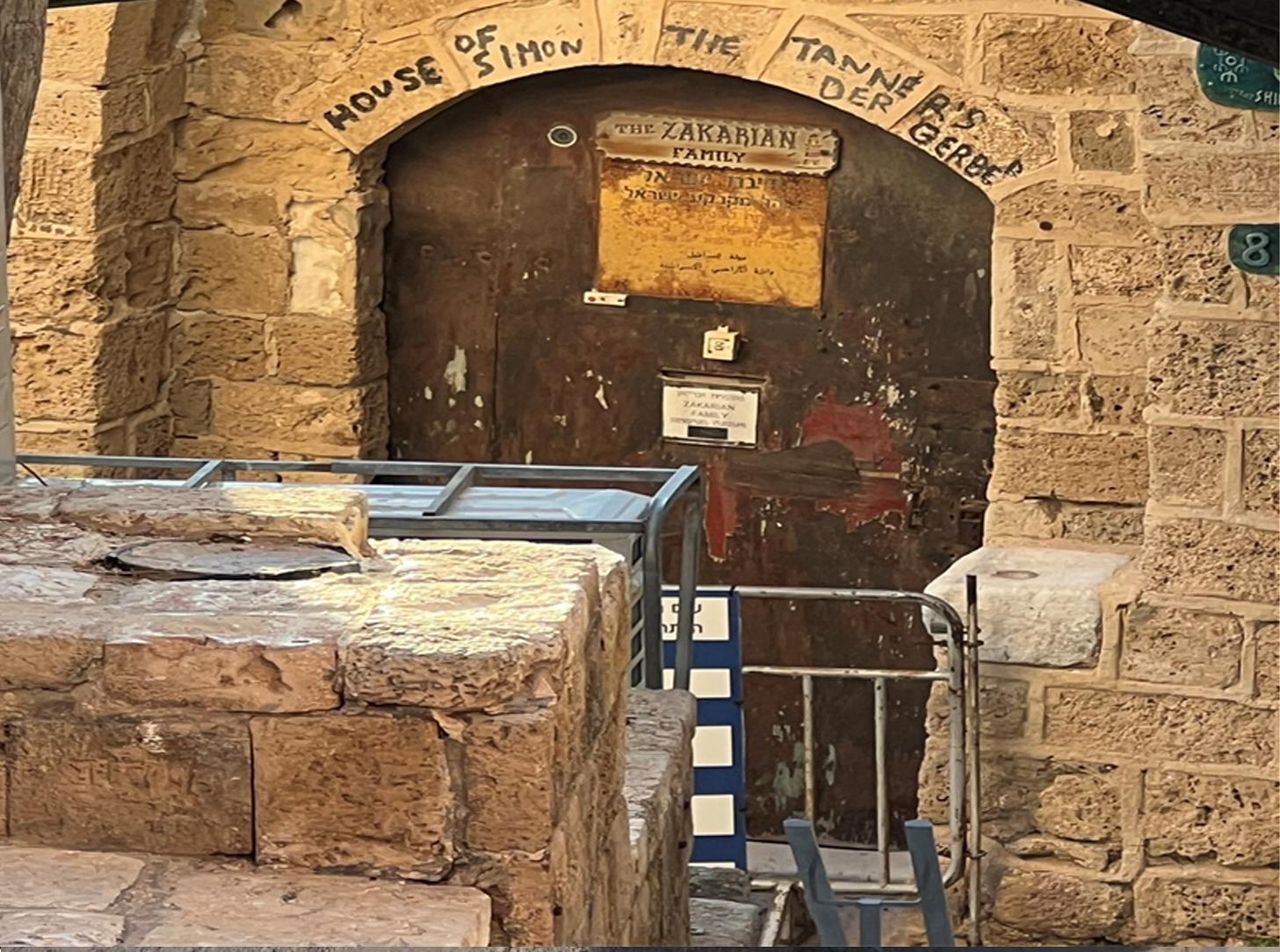
Cornelius stared at him in fear. “What is it, Lord?” he asked. The angel answered, “Your prayers and gifts to the poor have come up as a memorial offering before God. Now send men to Joppa to bring back a man named Simon who is called Peter. He is staying with Simon the tanner, whose house is by the sea.” - Acts 10:4-6
In Acts 10, three times God gave Peter visions of unclean sheets coming down and then being taken up to Heaven. He knew this vision meant that the gentiles (the unclean) were also called to become Christians.
Peter did not want to follow-through with what God was calling him to do. God sent three men to fetch Peter - where he would then be thrusted into following-through with what God was asking him to do.
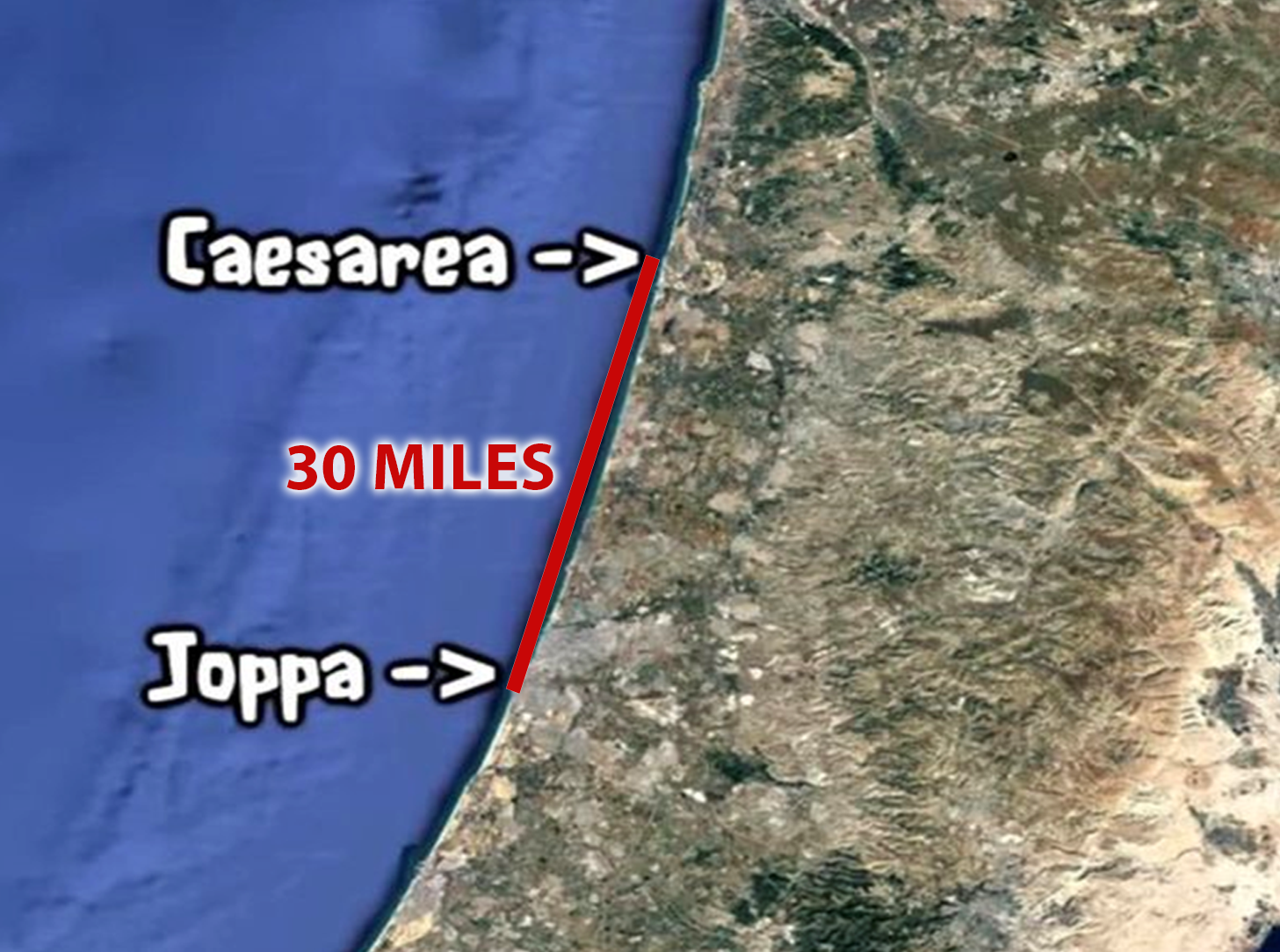
Peter went from Joppa to Caesarea.
The next day Peter started out with them, and some of the believers from Joppa went along. The following day he arrived in Caesarea. - Acts 10:25-24a
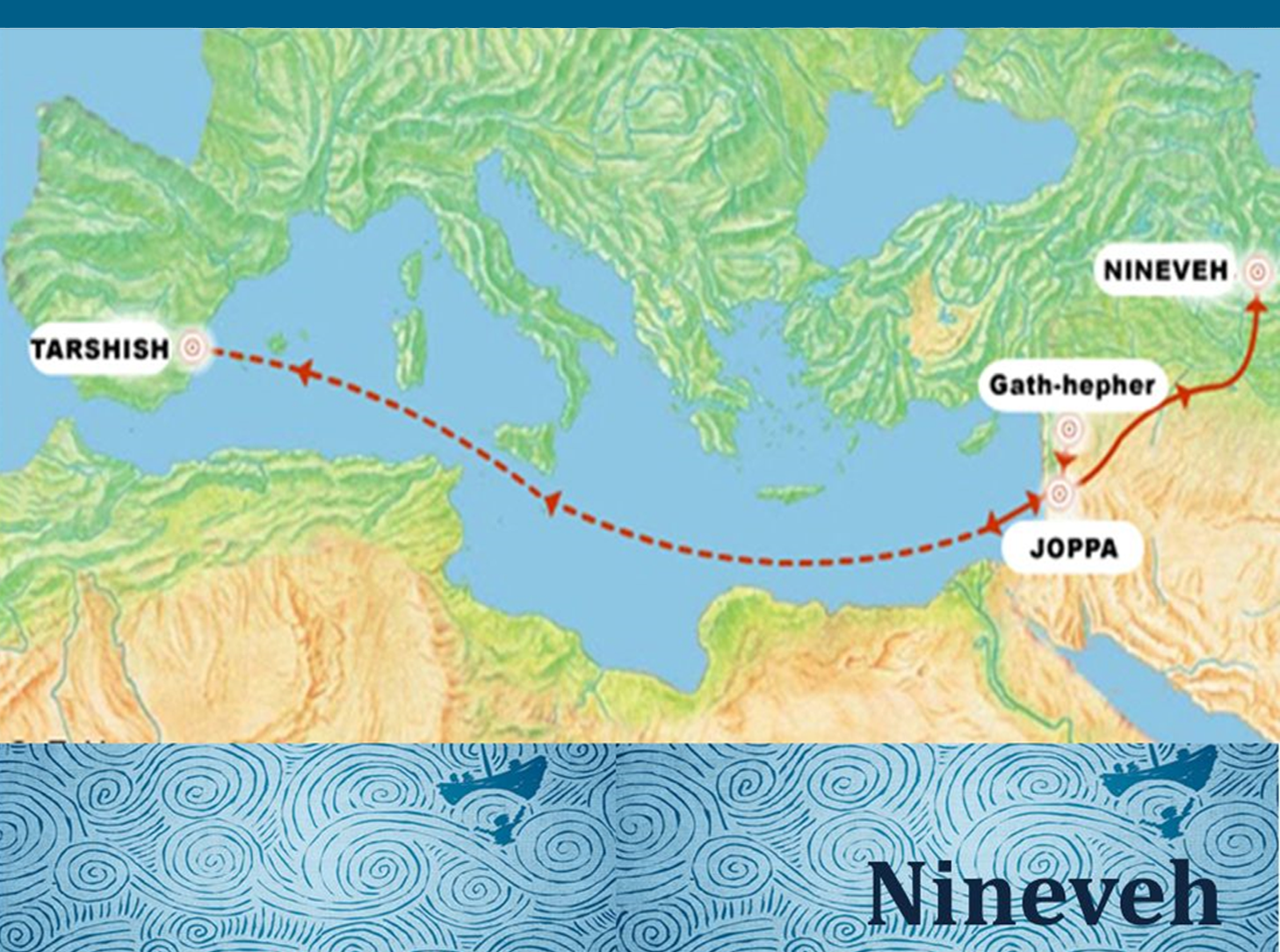
Does the story of Peter not wanting to go where God sent him sound familiar? Remember Jonah?
Neither of these men wanted to give the word of God to the gentiles.
There is neither Jew nor Greek, slave nor free, male nor female, for you are all one in Christ Jesus. - Galatians 3:28
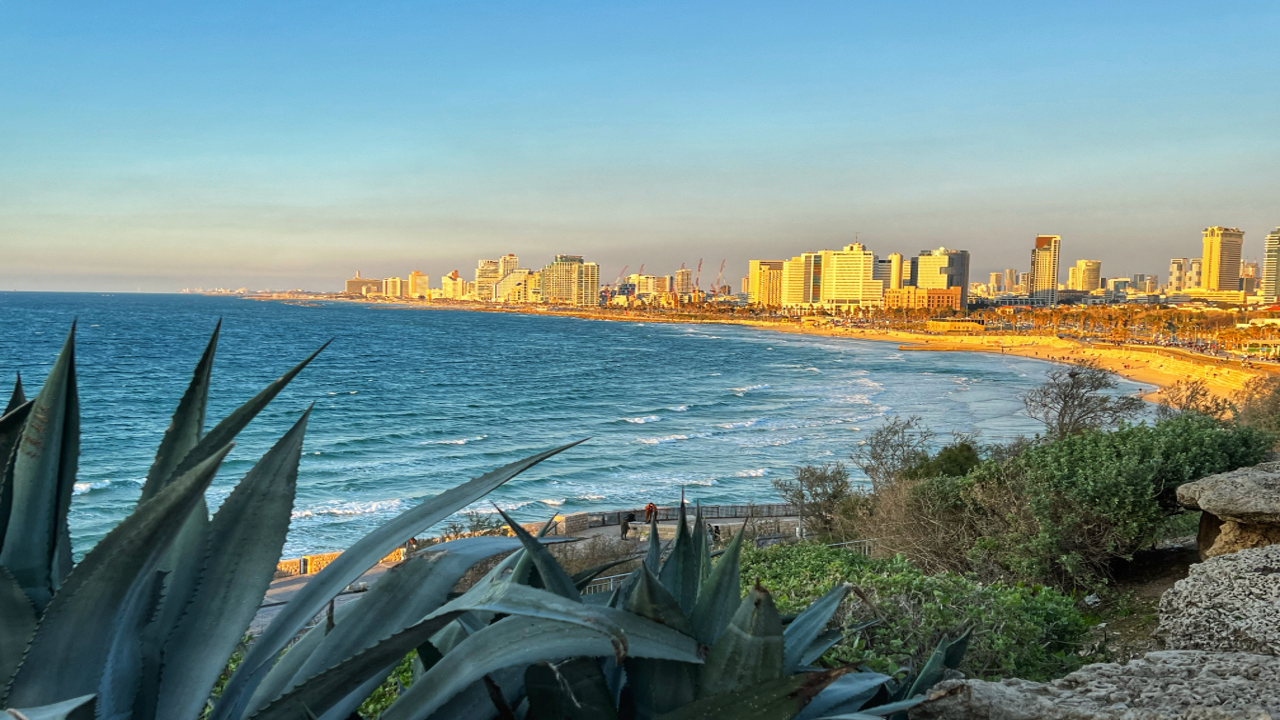
We are so grateful for Don & Cindy and all of the amazing imagery and knowledge they brought us through their recapping of their journey through Israel.
Learn more about Disciple Daily’s Experience Israel Tours, here: https://discipledaily.org/experience-israel-tour
