The Disciple John: Opening a Window into Knowing Who God Is
Message by: Don Chubb II
Don took us on a walk through John 1:1-18 and the truths we can learn from it.
Before we dove into it, Don gave us some historical context to this book…
The gospel of John would have been written in the early first century (based on the paper used/discovered). The transcripts were found in Egypt as early as 125 AD.
John was a history teacher. He lived into his 80s. He was not just one of the 12 disciples, he was one in the inner circle.
The book of John doesn't contradict the other three Gospels, but he gives a different take.
He wrote to a Greco-Roman audience. You will see that by the words and simplicity he uses.
John 1:1-18 (NASB)
1 In the beginning was the Word, and the Word was with God, and the Word was God. 2 He was in the beginning with God. 3 All things came into being through Him, and apart from Him not even one thing came into being that has come into being. 4 In Him was life, and the life was the Light of mankind. 5 And the Light shines in the darkness, and the darkness did not grasp it.
The Witness John the Baptist
6 A man came, one sent from God, and his name was John. 7 He came as a witness, to testify about the Light, so that all might believe through him. 8 He was not the Light, but he came to testify about the Light.
9 This was the true Light that, coming into the world, enlightens every person. 10 He was in the world, and the world came into being through Him, and yet the world did not know Him. 11 He came to His own, and His own people did not accept Him. 12 But as many as received Him, to them He gave the right to become children of God, to those who believe in His name, 13 who were born, not of blood, nor of the will of the flesh, nor of the will of a man, but of God.
The Word Made Flesh
14 And the Word became flesh, and dwelt among us; and we saw His glory, glory as of the only Son from the Father, full of grace and truth. 15 John testified about Him and called out, saying, “This was He of whom I said, ‘He who is coming after me has proved to be my superior, because He existed before me.’” 16 For of His fullness we have all received, and grace upon grace. 17 For the Law was given through Moses; grace and truth were realized through Jesus Christ. 18 No one has seen God at any time; God the only Son, who is in the arms of the Father, He has explained Him.
In verse 1, we read: In the beginning was the Word, and the Word was with God, and the Word was God.
This gives us further evidence of John’s appeal to the Greeks. For instance, for the word, “Word,” John uses the Greek word, Logos:
λόγος
Part of Speech: Noun, Masculine
Pronunciation: LO-gos
Definition: divine expression
Logos is also used in words we know like biology, psychology, theology, etc. Using this kind of language made what John was telling them more relatable.
In Genesis, God created everything out of nothing. He spoke, and they came into existence. This verse is really where we read about the Trinity.
The cosmological argument says the universe had a beginning that had to be caused by something.
The law of thermodynamics says the universe is falling apart.
Looking for an argument to prove we have a God? You are drowning in the proof that there is a God.
Things like the human body do not just fall into place by accident.
If He created it, He owns it. If He owns it, He has say on how it is to be.
In verse 4, we read: In Him was life, and the life was the Light of mankind.
Here, the word John used for, “life,” is zóé:
ζωή
Part of Speech: Noun, Feminine
Pronunciation: dzo-ay'
Definition: life-above
For the word, “light,” John uses the word phós:
φῶς
Part of Speech: Noun, Neuter
Pronunciation: foce
Definition: luminousness
You could also use this word for revelation.
Verse 5 helps nonbelievers to comprehend… and ultimately overcome: And the Light shines in the darkness, and the darkness did not grasp it.
As we read onto verse 6, we meet John the Baptist: A man came, one sent from God, and his name was John.
John the disciple followed John the Baptist before he followed Jesus.
John 1:35-42
The next day John was there again with two of his disciples. When he saw Jesus passing by, he said, “Look, the Lamb of God!”When the two disciples heard him say this, they followed Jesus. Turning around, Jesus saw them following and asked, “What do you want?” They said, “Rabbi” (which means “Teacher”), “where are you staying?”“Come,” he replied, “and you will see.” So they went and saw where he was staying, and they spent that day with him. It was about four in the afternoon.Andrew, Simon Peter’s brother, was one of the two who heard what John had said and who had followed Jesus. The first thing Andrew did was to find his brother Simon and tell him, “We have found the Messiah” (that is, the Christ). And he brought him to Jesus. Jesus looked at him and said, “You are Simon son of John. You will be called Cephas” (which, when translated, is Peter).
Back in John 1, verse 11 reads: He came to His own, and His own people did not accept Him.
Here, John calls out the fact that the Jews didn’t accept Jesus. Again, remembering that He was at the beginning, Jesus’ own creation didn’t recognize Him.
Verses 12-13 ARE the Gospel: But as many as received Him, to them He gave the right to become children of God, to those who believe in His name, who were born, not of blood, nor of the will of the flesh, nor of the will of a man, but of God.
This message spread through the Roman world like a wildfire.
The message of the Gospel is attractive. Salvation doesn't come through works and is not only available to one people…
Romans 4:5
But to him who does not work but believes on Him who justifies the ungodly, his faith is accounted for righteousness…
Luke 18:9-14
Also He spoke this parable to some who trusted in themselves that they were righteous, and despised others: “Two men went up to the temple to pray, one a Pharisee and the other a tax collector. The Pharisee stood and prayed thus with himself, ‘God, I thank You that I am not like other men—extortioners, unjust, adulterers, or even as this tax collector. I fast twice a week; I give tithes of all that I possess.’ And the tax collector, standing afar off, would not so much as raise his eyes to heaven, but beat his breast, saying, ‘God, be merciful to me a sinner!’ I tell you, this man went down to his house justified rather than the other; for everyone who exalts himself will be humbled, and he who humbles himself will be exalted.”
God is not asking for your perfection. He is asking for your humility. He sacrificed the most precious thing He had for you… His only Son.
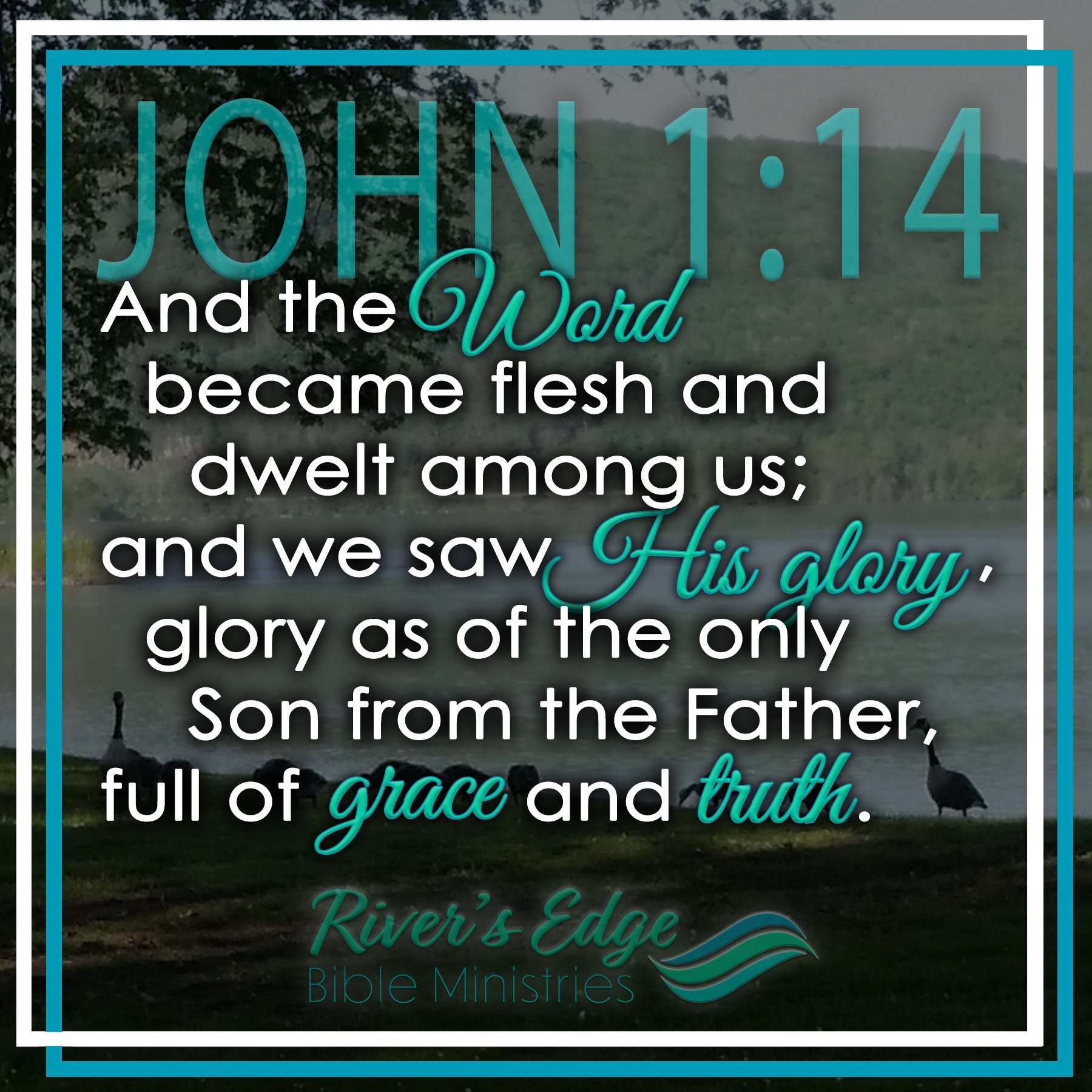
What words does God use to explain Himself (keeping in mind that He is unchanging)? We can find this in John 1:14: And the Word became flesh, and dwelt among us; and we saw His glory, glory as of the only Son from the Father, full of grace and truth.
God is full of grace and truth!
Exodus 34:6
And the Lord passed before him and proclaimed, “The Lord, the Lord God, merciful and gracious, longsuffering, and abounding in goodness and truth…
Hebrews 1:1-4
God, who at various times and in various ways spoke in time past to the fathers by the prophets, has in these last days spoken to us by His Son, whom He has appointed heir of all things, through whom also He made the worlds; who being the brightness of His glory and the express image of His person, and upholding all things by the word of His power, when He had by Himself purged our sins, sat down at the right hand of the Majesty on high, having become so much better than the angels, as He has by inheritance obtained a more excellent name than they.
Don remembers clearly when he first felt compelled to begin digging into God’s word harder and more fervently. It was when he read:
Matthew 7:22-23
Many will say to me on that day, ‘Lord, Lord, did we not prophesy in your name and in your name drive out demons and in your name perform many miracles?’ Then I will tell them plainly, ‘I never knew you. Away from me, you evildoers!’
We should always be trying to learn more about God and KNOW him. If we want God to be able to say He knows us, we should know who He is.
Want to know what God is like? Study what Jesus was like… the kind of life He lived.
If we ask God to know Him better, He will answer us.
Revelation 3:20
Behold, I stand at the door and knock. If anyone hears My voice and opens the door, I will come in to him and dine with him, and he with Me.